In earlier post, we have built the green part of below app. Part-1

Now lets continue building red part of the design.

In earlier post, we have built the green part of below app. Part-1
Now lets continue building red part of the design.
Azure Function: Azure Functions is a serverless application platform. It allows developers to host business logic that can be executed without provisioning infrastructure. Functions provides intrinsic scalability and you are charged only for the resources used. You can write your function code in the language of your choice, including C#, F#, JavaScript, Python, and PowerShell Core. Support for package managers like NuGet and NPM is also included, so you can use popular libraries in your business logic.
Says Microsoft, now we will build some simple stuff shown below and understand basics while we do so.
Azure Policy helps to enforce organizational standards and to assess compliance at-scale. Through its compliance dashboard, it provides an aggregated view to evaluate the overall state of the environment, with the ability to drill down to the per-resource, per-policy granularity.
Thats what Microsoft documentation says. Now let me say in my way.
I work in a bank and the regulatory compliance says, data of our bank shouldn't leave Autralia.
So if one of our developers deployed a production azure resource in any other AZ Regions, our organization has to pay big penalties for not complying with regulations.
How do we do it? Using Azure Policy Assignment.
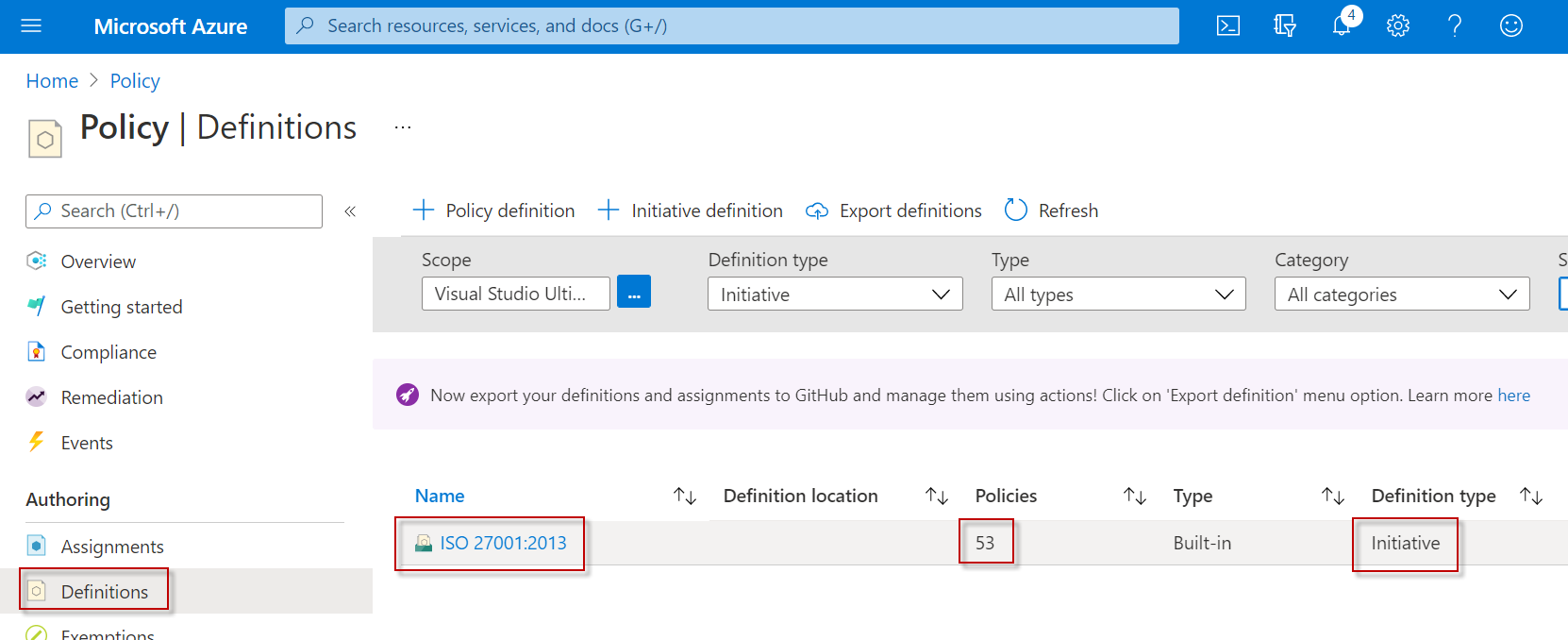
Before we jump on to implemntation, you need to know about difference between Policy and Initiative.
To keep it simple, Policy is a rule and Initiave is a collcetion of policies which set a standard.
Eg: ISO(standard) is a Intiative, which comprises of many policies which makes that standard.
In this article we will see How we can add Swagger to an existing WebAPI project.
First why we need swagger here in this case?
Unlike SAOP based web sevrices or WCF Services, WebAPI are RESTFul. That means there is no WSDL in WebAPI. So Unless you prepare proper documentation about the methods, parameters and outputs, its hard to any consumer of the service to interpret them.
This is where swagger comes into the picture. If you use swagger and SwaggerUI in your WebAPI project, it pretty much takes care of the documentation part. It not only gives you the complete details of methods, parameters and outputs of the sevice, but also provides a UI component where consumers can test the service, without any third party tools.

DevOps: I cannot do justice to DevOps in a single article. Its an Ocean. But for our purposes here is what i would say if some one asks me about it.
"DevOps is a practice in which all the stakeholders were actively involved in entire lifecycle of product from Development , Testing, Productionizing and Production Support."
Core values of DevOps defined by CAMS - Culture, Automation, Measurement and Sharing.
This is eagle eye view of the core values.
Lets talk about second core value, Automation. Its not about just automation of everything in software life cycle.
Automation: It talks about fastening stages of SDLC with continuous integration and delivery thus reducing effort and time to roll new changes. Multiple changes getting tested and deployed in a day - make people's life a lot better. Please keep in mind "Automation" in DevOps means giving prefference to "People over Process over Tools".
Please reffer to various guides or gurus for deep dive into DevOps.
Our objective here is to implement CI/CD (Continuous Integration / Continues Delivery) in Azure and learn how to cofigure your first Azure Devops Build and Release pipelines. Using which we will push our code to various stages DEV, QA and PROD.


Infrastucture as Code became a critical part of Devops. Some of the Infrastructure management tools that we know are CloudFormation famous for AWS, ARM for Azure, CDM for Google cloud platforms.

